3. Table of Contents Previous Next
7/30/26
Uncle John
John Lockridge (1906–1983), Grandma Mindte’s brother, was one of the more interesting characters in our family. The Lockridges moved from their home in Indiana to Reno, Nevada, sometime before 1920. John’s occupation was listed as “Battery Man” in the 1923 Reno telephone directory. His first marriage didn’t last, but there are a few photos of his first wife, Edwina, in the family archive. He met and married his second wife, Dorothy Madhill, in Reno. By 1940, the family had moved to Santa Monica, California. I don’t believe John ever fathered any children.
Now for the interesting parts:
According to my father, John ended up in prison a couple of times. Once, he robbed a cab driver at gunpoint, and another time, he was caught counterfeiting.
John was the designer of the “JL Special,” a tethered, gasoline-powered model race car. The few extant examples of the car are highly prized by collectors. My banjo-picking friend Reed Martin had a JL Special poster hanging in his house. Daddy noticed it and told Reed that John Lockridge was his uncle. Reed wanted us to take him to my great-uncle Scotty’s house in California, where Daddy thought some of the JL car parts might still be stored. Daddy was considering it, but Mom put a stop to the idea, saying, “You’ve never visited Scotty before, and now you want to go and root through his shed?” That ended that—no JL Special for us.
When I was growing up, John had a laboratory in the basement of Grandma Mindte’s house on Beall Avenue in Rockville, Maryland. This was after Grandpa died, of course, for The Commander would never have allowed him to live there and set up shop. Grandpa Mindte was known as The Commander because of his rank in the Navy, but also because of the way he ran his household.
In 1964, on my seventh birthday, I got the grand tour of John’s lab. There was a printing press, perhaps for more counterfeiting, but I don’t know, along with all kinds of electronic equipment. It was the perfect young boy’s paradise. The press was flapping, and all kinds of gadgets with vacuum tubes were lit up and humming. It was total chaos, with papers and books scattered everywhere and half-finished sandwiches and coffee cups all about.
After the tour, he cautioned me not to tell my father about what I had seen there. I agreed and kept my word until 1974, when another incident caused me to spill the beans.
In the late 1960s, John married a sweet lady named Katy. The couple moved into a house on the western outskirts of Rockville, where it seemed John was making an attempt to normalize his life. He attended some family functions and even invited us to their home for meals several times.
By 1973, brilliant, misguided John, the mad scientist, was back. I don’t know what became of Katy. He had bought a hearse and, with the help of Daddy’s employees, cut its roof off and extended the sides to turn it into a walk-in motorhome. He had his bed in there and a cookstove, but most importantly, there was a home-built computer with a teletype machine as the input-output device.
I don’t want to get too technical, but it was a Baudot teletype, which uses a five-bit code to communicate with the computer. Most computers of the day used ASCII, an eight-bit code. John’s reason for using the less efficient code was that he had invented a new way to type. “You can type as fast as you can think,” he said. He had wired each of the five Baudot bits to a switch with an indentation about the size of a fingertip. The idea was to rest your hands on two sets of switches and directly input the five-bit Baudot code into the computer, alternating between left and right hands. So, if you learned the Baudot code for each letter, you could input data as fast as you could press your fingers down.
He parked the converted hearse in Daddy’s shop on Stonestreet Avenue in Rockville and lived there for about a year while working on his invention. One day, when I arrived at the shop after school, John told me he had to scrap the whole idea because it would take longer than a lifetime to train someone to use it. He didn’t say whether he had been able to train himself!
One day in the winter of 1974, John and his hearse were gone when Daddy arrived at the shop. Also missing was one of Daddy’s credit cards, which he had left for the employees to use for gas. That’s when I finally spoke up about what I had seen in John’s laboratory ten years earlier.
Daddy didn’t report the card missing. I suppose he figured John wouldn’t rip him off too badly. My parents followed John’s route across the country by tracking the credit card receipts, as Mom kept urging Daddy to report the card. But the only charges were for gasoline (cheap then) and a few meals at truck stops, so Daddy had been right about his uncle’s intentions. After John reached his destination, he stopped using the card.
Photo - John Lockridge, 1960s
Tom Mindte
July 2026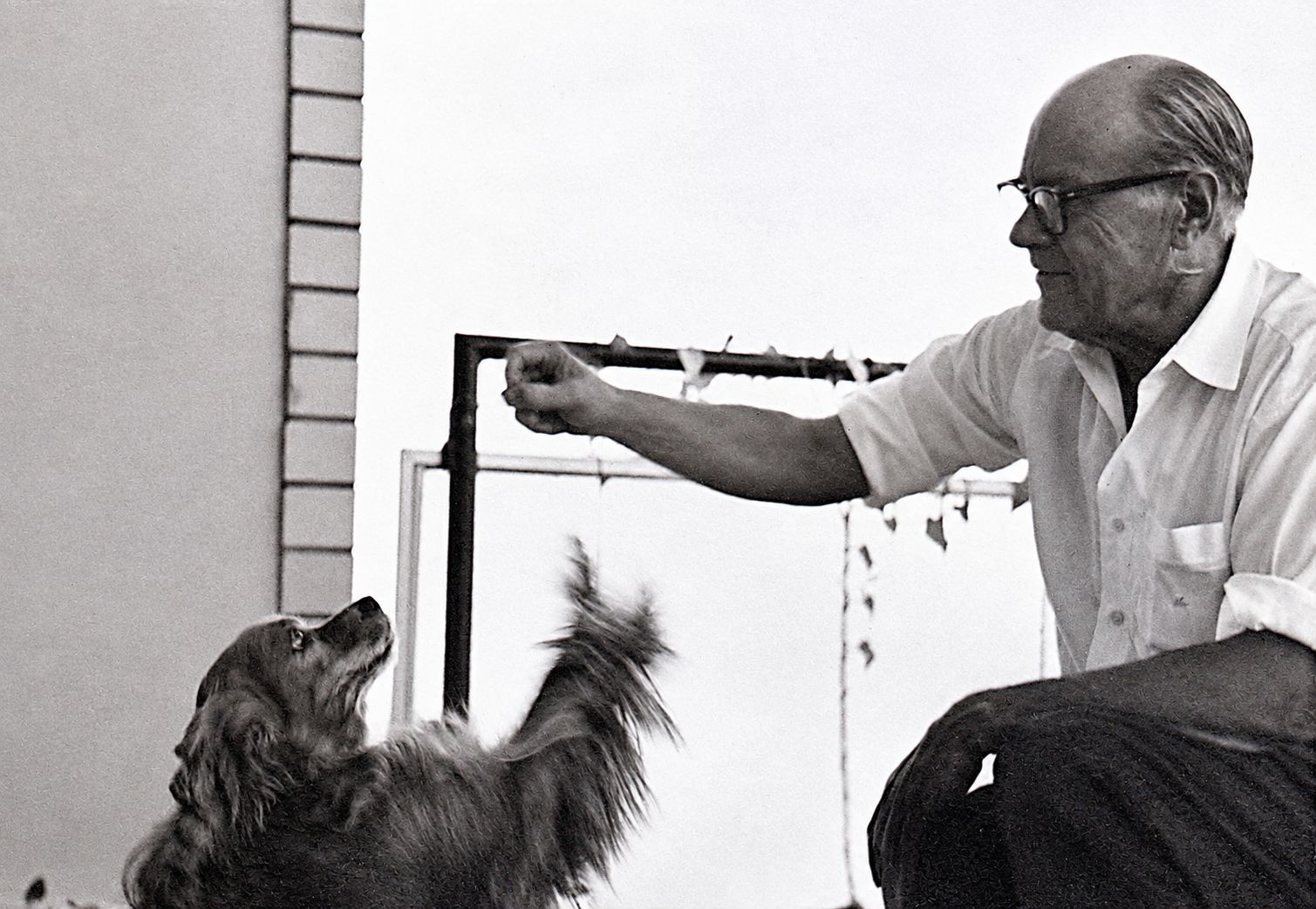
John Lockridge, 1960s