33. Table of Contents Previous Next
9/29/26
Pete Pike, Roni Stoneman, Mike Auldridge, et al. et al.
WGAY in Silver Spring, Maryland, was one of several radio stations in the Washington area that featured hillbilly music in the 1950s. When I say hillbilly music, I’m talking about the genres now known as country, western, bluegrass, old-time, western swing, and rockabilly, that were once considered to be the same type of music. So, Johnny Cash, The Carter Family, Bill Monroe, and Bob Wills, were all playing hillbilly music and you could hear them all on the same station. What happened? Marketers and some scholars decided to split it up to suit their own purposes. Anyway, back to WGAY. Buzz Busby and Pete Pike performed live on the station on Saturdays and Sundays during 1953 and 1954. They started as a duo and soon added Don Bryant on banjo and Lee Cole on bass. Deejay, Fiddlin’ Curley Smith, joined them occasionally. Every weekend, teenager Tom Knowles connected his Pentron tape recorder to the speaker terminals of his family’s radio console to record Buzz and Pete.
I’ve discovered that you don’t need any fancy equipment to travel in time. A pen or a word processor will do the trick, so let’s travel from 1954 to 1996.
Tom Knowles had given me dubbed copies of those radio shows on cassette tapes, and I got the idea that the material should be released on CD. Tom kindly loaned me the reel-to-reel tapes he had recorded four decades earlier, and I carried them to Bobby Patterson’s studio near Galax, Virginia, where Steve Kilby mastered and digitized the audio.
I needed Pete Pike’s permission to release the radio shows on my Patuxent label. Tracking him down to a restaurant he had recently opened in his hometown of Amelia, Virginia, I planned a trip there to discuss the matter with him. I invited Bryan Deere, who is a big fan of Buzz and Pete’s music, to go along. Bryan casually mentioned our plans to Roni Stoneman, who was in town visiting friends. After inviting herself, Roni told Dobro player Ric Nelson, who had played occasionally with Pop Stoneman. Ric told his friend and neighbor Mike Auldridge. Mike told Perry Westland, who had led a band in DC in the 40s and 50s. So, my plan to meet with Pete turned into a big road trip with half a dozen participants. I could have refused to carry that many along, but what the heck? They were some of my musical heroes and I couldn’t bring myself to disappoint them. It just so happened that the stretch limousine that was our ‘band bus’ was big enough for the multitude.
When our crowd of musicians swarmed into Pete’s restaurant at lunchtime, the joint was jumpin’. We occupied the last available table and saw that Pete did everything at his restaurant except cook. He greeted customers, waited tables, bussed, answered the phone, and I don’t know what all. He stopped by our table, took our orders, and told me he wouldn’t have much time to talk. Once, he hovered for about two minutes and I told him about the recordings. Then he was off again, taking another customer’s order. The next time, he was only around long enough to say, “I only do gospel music now, so I don’t believe I want it released.” Then, he was off again. On his next pass, Roni said, “Pete, your fans love you and they want to hear your music.” Pete, as he was leaving again: “I don’t know.” Roni to me: “Ah ha! That wasn’t a definite no.” Roni, on her feet and following Pete around: “Pete, if you don’t let Tom release it, it’ll never be heard and you’ll regret it the rest of your life.” I had unquestionably lost control of the situation! Finally, Pete raised his hands as if fending off an attack and said to Roni, “All right, all right, just go sit down.” Roni, still following: “That’s a verbal contract, I have witnesses.” Pete retreated into the kitchen and was gone for about ten minutes. When he emerged, he came to our table and asked me to call him to discuss it on the following Monday when the restaurant would be closed.
On the way back to Washinton, the seating configuration in the limo became rearranged so that Roni was sitting next to Mike Auldridge. Roni talked to Mike for the entire two-and-a-half-hour trip. When I said she talked to Mike, I mean Mike uttered only two or three sentences the entire trip. He would say, “Is that right?” after about ten minutes of Roni. After another twenty minutes, Mike said something like “No kidding?” You get the picture. I finally made it home after the last of the crew was dropped off. What a day!
A couple of days later, Mike was the first to arrive at my studio for a session with Richard Bennett and Jimmy Gaudreau. I said, “Mike, Roni Stoneman called and said she was gonna be a few minutes late for the session.” Mike: “What are you talking about?” Me: “Roni said she’s playing banjo on this album.” Mike: “I’ll be ......” Me: “Just kidding,” Mike: “You......” We had a good laugh.
I never released the Buzz and Pete album. I felt that Pete had caved under pressure and that he really didn’t want the recordings released. The whole idea of the album was based on my supposition that he and Buzz would be thrilled to have their old music available again. It’s a good thing I didn’t push him any further, as unbeknownst to me at the time, I would need his cooperation in the future when I began collecting source material for my Buzz Busby biography. Buzz, who had been on board from the beginning, had some – let’s just say unkind remarks about Pete that may be politely substituted by the southernism, “bless his heart.”
Photos:
1. Pete Pike at home in 2004
2. Roni Stoneman at Patuxent Studio
3. Mike Auldridge
4. My Lincoln stretch limousine.
Tom Mindte
September 2026
p.s. I just want to let you know that Roni Stoneman was one of my best friends and a hero to me. So, don’t think I resented her efforts to help. That assertiveness and her amazing sense of humor helped make her a country music legend as a cast member of “Hee Haw” for twenty some years. I worked with her for many years as record producer and occasional side-man and we always got along and had loads of fun. Her one-way conversation with Mike was just her exuberant personality shining through. Besides, the whole thing was a hoot to the other passengers.
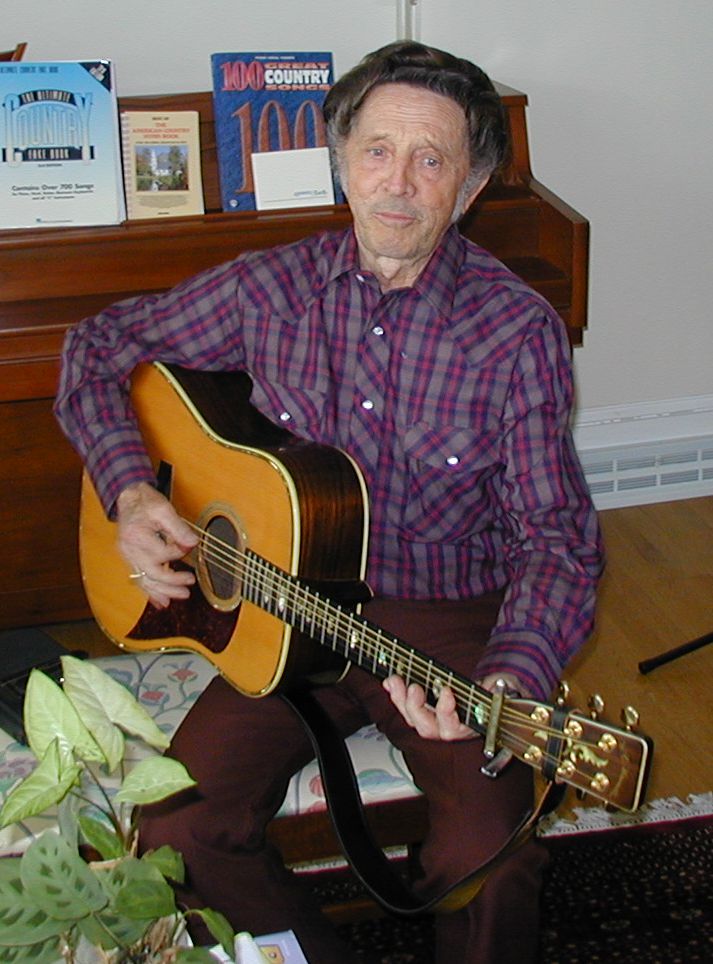
Pete Pike at home in 2004
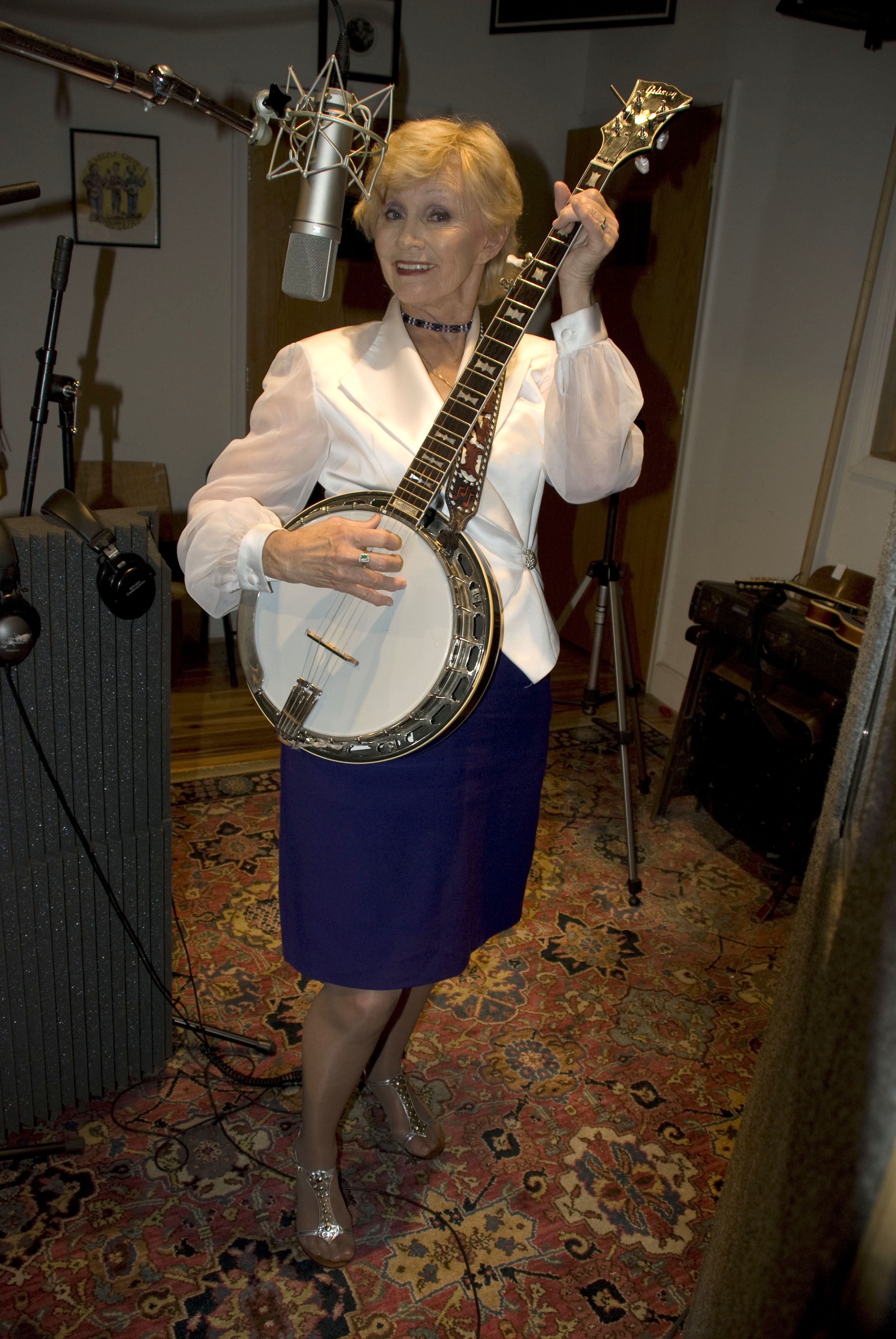
Roni Stoneman at Patuxent Studio
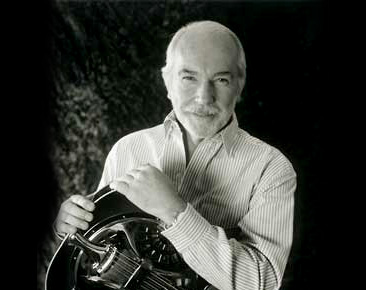
Mike Auldridge
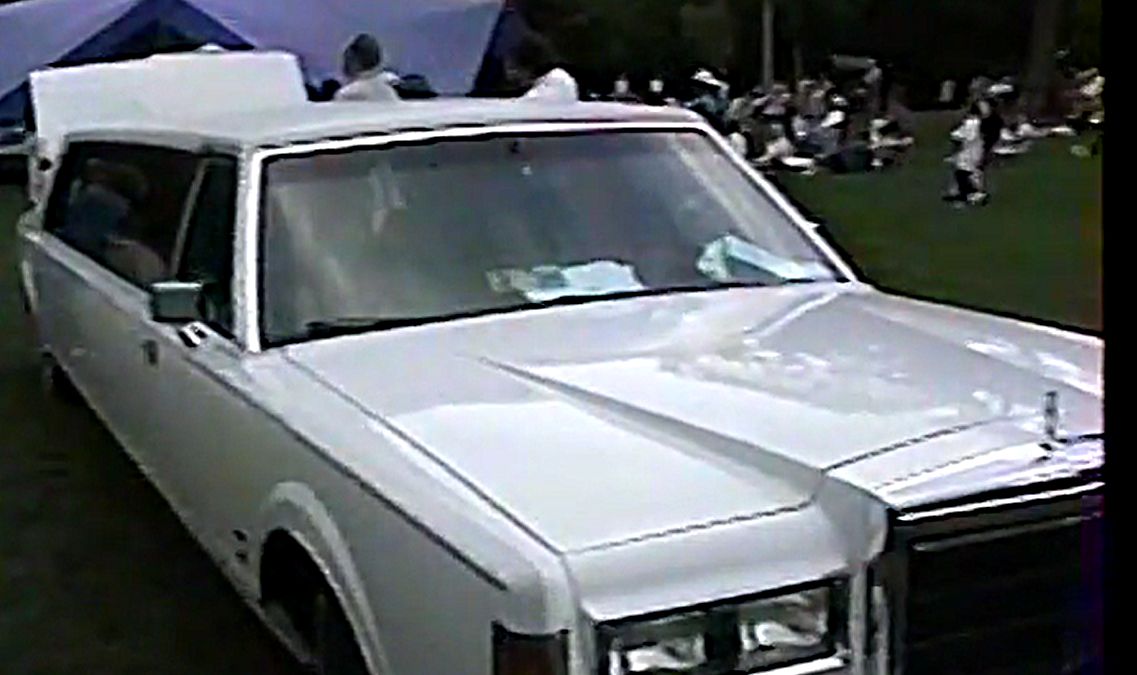
My Lincoln stretch limousine