39. Table of Contents Previous Next
10/11/26
Music is Like Swimming
I’ve heard it said, ad nauseam, that music is like math. As one who has studied the mathematics necessary to earn a master’s degree in engineering, and one who has produced hundreds of albums of music, I say “poppycock.” While mathematical terms and formulae are useful in transcribing, teaching, and learning music, you just can’t make good music if you only think of it as a series of equations (in my opinion). Good music comes from the artistic and creative part of the psyche, or heart and soul, if you will, not the analytical part (also in my opinion). But I can say that while I don’t believe music is like math, I do believe it’s like swimming in one respect. After a meal, you should wait forty-five minutes before participating in a recording session, just as you should wait before jumping in the pool.
I’ll tell you how I came to that conclusion.
I’ve recorded over six hundred projects in forty-two years of operating a recording studio. During that time, I’ve worked with musicians with a wide range of abilities and personality types. I think I can safely say that I’ve seen it all. Well, maybe not all, but I don’t often see anything the surprises me these days.
My preferred way of producing albums is to book two or three consecutive days to record most of the tracks. That way, musicians can keep the ball rolling, once they are on a roll. Typically, I split each day into morning and afternoon sessions, with a lunch break. In my experience, it’s not a good idea to work straight through without a break, as ears and bodies tire out and the music suffers. You can probably surmise that I hate building up songs track-by-track with a click, as discerning ears can sense the artificiality. But sometimes it’s necessary to record that way for reasons that I’ll tell you about some other time, I had better get to the swimming analogy.
Over the years, I’ve noticed that many of the afternoon sessions start off poorly because of the musicians’ inability to keep time and play together as a unit. Sometimes the problem is barely noticeable. But there was one session that really got me to thinking about this whole subject and coming to the conclusion that’s the topic of today’s article.
I was recording an ensemble made up of the best jazz musicians in the Washington, DC, area. The featured artist was a violinist, and the accompanists were veteran musicians who had previously participated in dozens of sessions at various studios. Several of them were former members of armed services bands. All of them were seasoned professionals with decades of experience. Their timing was as precise as a quartz crystal.
The morning session on the first day went great. The musicians and technical crew performed flawlessly. We knocked out about a quarter of the album that morning, so we were ahead of schedule. After lunch at an all-you-can-eat buffet, it seemed like there was a different band in the studio. The drummer was rushing the beat while the rest were dragging. The engineer was making mistakes, which was unusual for him. The producer (me) was drowsy. You may be thinking that it’s natural to want a nap and to be sluggish after a big meal. But what about the drummer? He was super-charged with energy, rushing the beat. Ah ha! I figured it out (I think). The drummer was the kind of fellow we love to hate - the kind who can eat as much as he wants and never gain an ounce. An internet search told me that folks with that type of metabolism are known as ectomorphs. The rest of the musicians and staff on that session were normal people like me (in my opinion). For us, even one donut causes us a noticeable weight spike. We are endomorphs.
After a meal, tempos in sessions made up exclusively of either metabolic type tend to rush or drag to varying degrees. But when ectomorphs collaborate with endomorphs, it’s a mess. Sometimes songs stop in the middle and arguments start. To head off such unpleasantness, I always recommend forty-five minutes of post-lunch jamming and socializing for the musicians and staff. Clients usually take my advice when I let them know that they won’t be charged for that time. Besides helping the timing, the break allows the musicians to get to know the engineer, technicians, and me better. After the respite, the group can pick up where they left off and make beautiful music once more.
So, don’t jump in the pool or the studio for forty-five minutes after eating and you may live happily ever after.
Photos:
1. The Patuxent Music staff in 2007 – Arne Eliasson, Felipe Escobar, Jordan Tice, John Escobar, Anders Eliasson, me, and Brian Vollmer. Eric Rhodes was on the payroll then too. He must have been off that day.
2. The only day Patuxent was closed in 2016.
3. Me in the control room
4. The “big room”
Tom Mindte
October 2026
The Patuxent Music staff in 2007 – Arne Eliasson, Felipe Escobar,
Jordan Tice, John Escobar, Anders Eliasson, me, and Brian Vollmer. Eric
Rhodes was on the payroll then too. He must have been off that day.

The only day Patuxent was closed in 2016
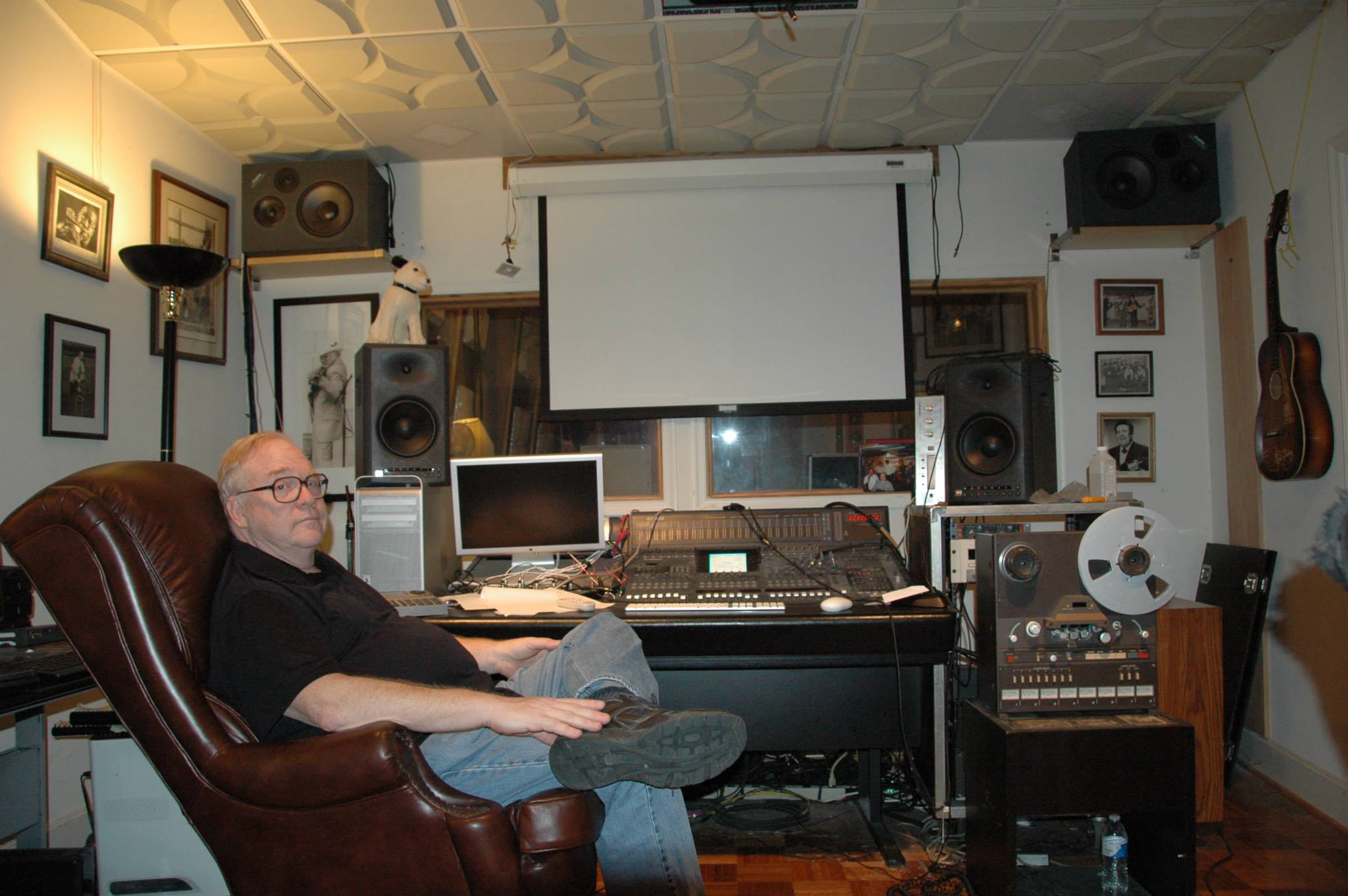
Me in the control room

The “big room”