50. Table of Contents Previous Next
11/17/26
August and Anna
Just about every member of my generation in our family has a little stash of heirlooms. Those keepsakes rest on shelves, hang on walls, and reside in boxes in closets and attics. Last spring, I asked my sisters to bring their old photographs and documents to the family Easter celebration at my niece’s house. I had volunteered to digitize them for an online family archive. By this summer, I had also collected photographs and documents from several cousins for the project.
When I saw the faces of the grandparents of my grandparents looking at me from the pictures, I started to think about my heritage and had a hankering to delve into genealogy. Just as I was about to take the plunge, I met a fellow at a fiddlers’ convention who, instead of playing or talking about music, talked and talked about great-aunt so-and-so and grandpa this and that, none of whom were all that interesting to anyone but himself. He had caught the genealogy bug.
There are websites that help you trace your ancestry back, if not to Adam and Eve, at least back to the time of Shakespeare. But I don’t feel any connection to those ultra-antique folks. I’d rather read about Shakespeare himself. I saw a statistic that there are about thirty-five million people worldwide, including ten million in the United States, who are descended from the passengers aboard the Mayflower in 1620. That seemed unbelievable until I found corroborating numbers posted by the General Society of Mayflower Descendants, which seems to be a reliable source.
When I realized that thousands of people share some of my ancestors from ten generations back, my desire to seek them out faded. Besides, even if Shakespeare actually turned out to be my umpteenth great something, I probably wouldn’t be able to collect any royalties on his plays.
So, I decided to limit my ancestral quest to those who were remembered by my grandparents. In most cases, that meant two or three generations before them.
At the risk of being tagged as a genealogy nerd, I’ll tell you about my great-great-grandfather, whose story may be of some interest.
__________________________
Sebastian Mindte and his wife, Elise Ramm, were both born in Germany in the middle of the nineteenth century. They crossed the pond separately and ended up in Davenport, Iowa, where they married and had three children: Anna, Carrie, and my great-grandfather, Carl. Sebastian worked as a carpenter and apparently was industrious enough to make a down payment on a house, but at some point, for reasons lost to history, he fell on hard times. Newspaper accounts show that when Elise and Sebastian’s children were very young, they lost their home and were faced with a thousand-dollar judgment they couldn’t afford to pay. Their children were placed in an orphanage by the court a few years later.
After the foreclosure and the loss of their children, Sebastian and Elise disappeared from the records.
_________________________________
They reappeared a few years later as August and Anna Mindte, with their family back together. I suppose they began to call themselves by their middle names to avoid being connected with their past and stigmatized for having been destitute. In the “after” photo, they and their son, Carl, appear to be prosperous and well-fed.
I’m sure that any of you who have kin with real skeletons in the closet will find August and Anna’s story mild in comparison, but their story of loss and reunion touched my heart.
Photos:
1. Elise (Anna) & Sebastian (August) with Children, Anna, Carl, and Carrie c. 1886
2. Elise (Anna), Sebastian (August), and Carl c. 1893
3. Newspaper clippings from Davenport, Iowa
Tom Mindte
November 2026
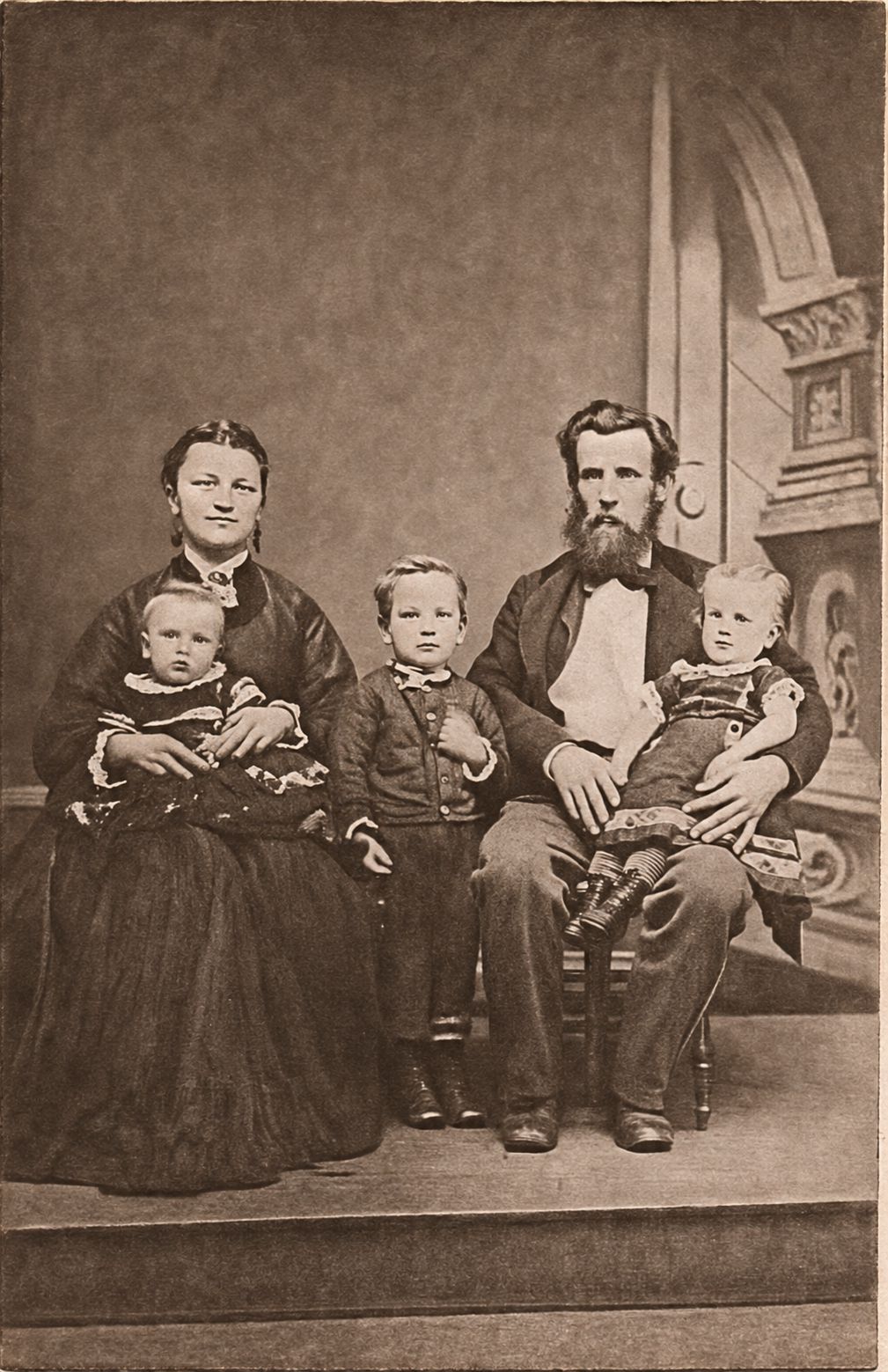
Elise (Anna) & Sebastian (August) with Children, Anna, Carl, and Carrie c. 1886
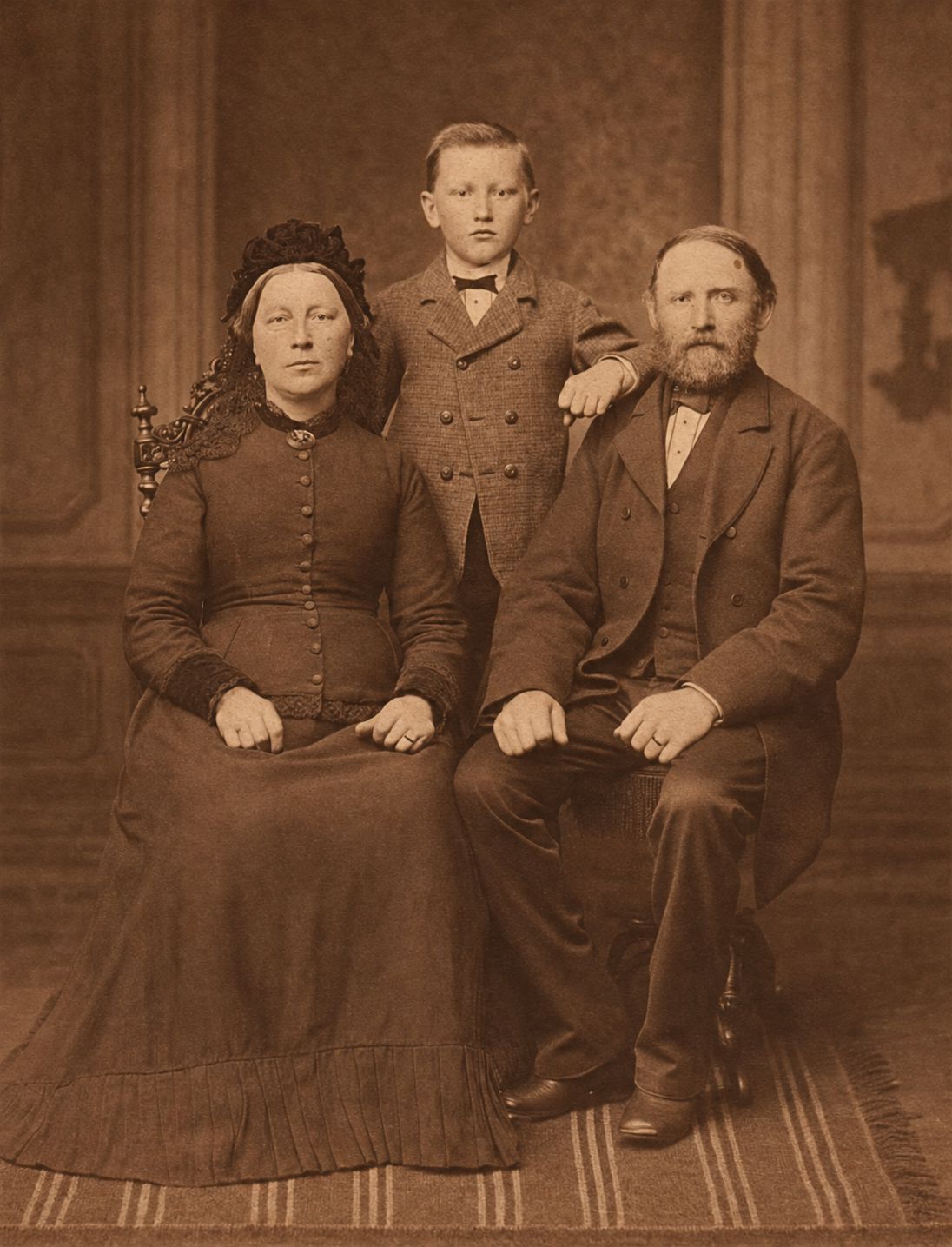
Elise (Anna), Sebastian (August), and Carl c. 1893
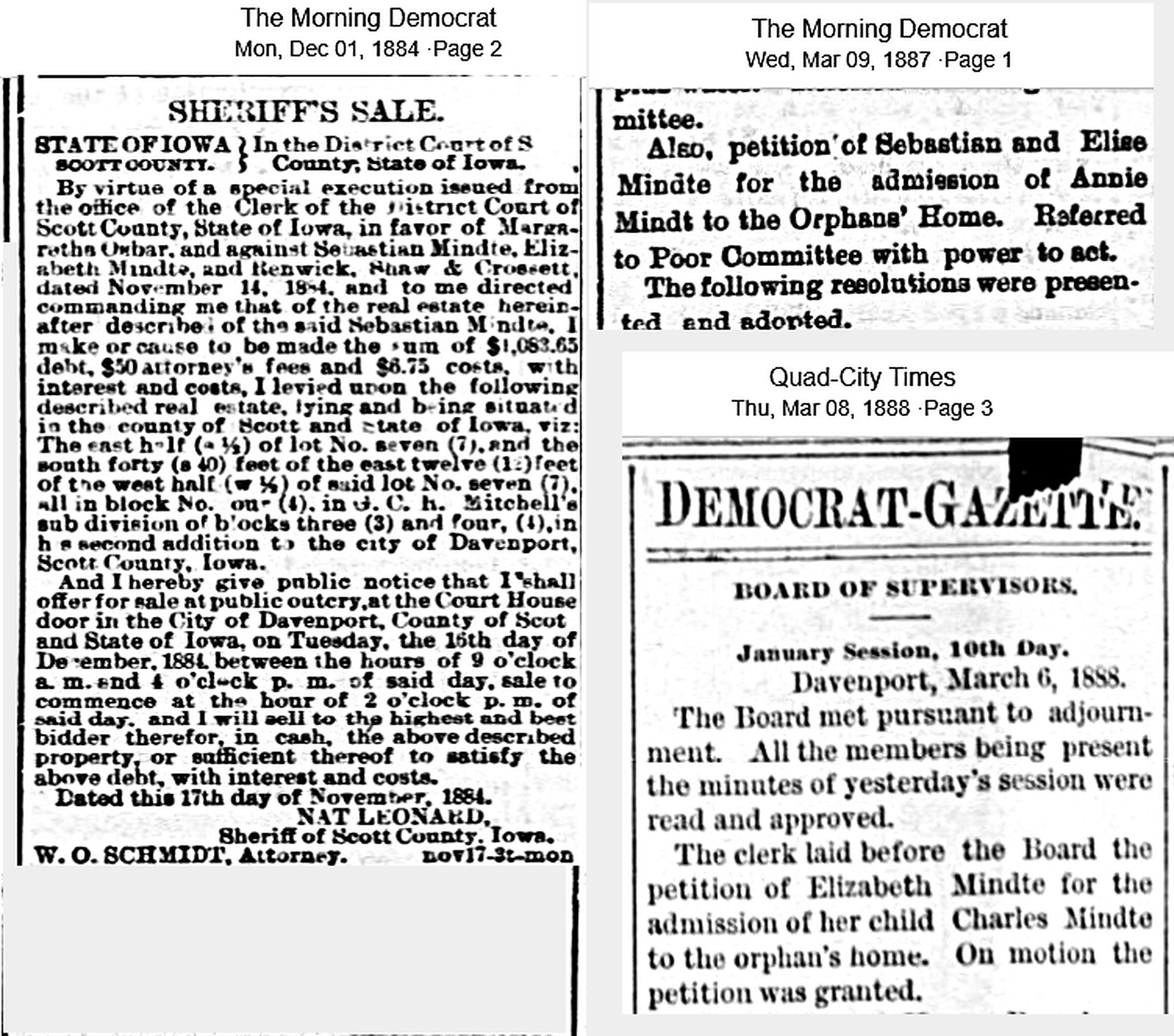
Newspaper clippings from Davenport, Iowa