
Me at the studio with Donna, Patsy, and Roni
21. Table of Contents Previous Next
9/6/2026
“Patsy and the House of the Rising Sun”
First, a little history.
Ernest V. “Pop” Stoneman of Galax, Virginia, paved the way for all of us who play country, bluegrass, and old-time music. Pop was making records years before Jimmie Rodgers and the Carter Family, who are generally considered to be the founders of our genre. It was Pop who organized the famed 1927 Bristol Sessions known as the “Big Bang” of country music. But what was before the Big Bang? Cosmologists say there was nothing. Musicologists say there was Pop Stoneman.
Pop and family moved to Washington, DC, from Galax when the Great Depression took their home and most of their possessions. They rebuilt their lives and eventually had a go at music again. Pop and his children formed a band that went through some name changes, but in the end was called simply, “The Stonemans.” They had considerable success in Washington, appearing on several television programs and signing with Starday Records. In 1965 they were ready for the big time and moved to Nashville, where they recorded for MGM and RCA. They won the Country Music Association’s Vocal Group of the Year award in 1967. Pop was inducted into the Country Music Hall of Fame in 2008.
That’s enough background to put my story in context, but I urge you to read “The Stonemans: An Appalachian Family and the Music That Shaped Their Lives” by Ivan M. Tribe, University of Illinois Press, 1993. Tribe’s book will provide you with the details I glossed over.
Now for my story:
Many of you know that I own a record label, Patuxent Music. In 2008, I got the idea that it was time for the surviving members of The Stonemans, Patsy, Donna, and Roni, to record a new album. There hadn’t been a Stonemen release since 1988, and I figured they still had fans who would buy a new album, and it just might turn a profit. When I asked Roni, she immediately agreed that it was a good idea. She said, “I can get Donna to do it, but we’ll have to get it past Patsy.” When I asked, “What’s the trouble?” Roni said her older sister would be “... a tough nut to crack.” And then, “Why don’t you just record me and Donna?” Well, I didn’t want to do that, I wanted all three. So, Roni, Donna, and I made the trip to Patsy’s house in Manchester, Tennessee for a brow-beating session. (As if such tactics would work on Patsy, who kept a loaded shotgun next to her front door!) I had the recording contract, lacking only Patsy’s signature, in-hand and ready for the final autograph. Patsy’s first question was “What’s in it for you?” then, “How are you going to make anything on three old women?” I stammered something about them still having fans and not recording for a long time, and so on. Patsy wanted to know who else was on my label, who was my distributor, the royalty rate, who would pay traveling expenses to Maryland, and if there would be an advance. Recovering my wits, I told her about Frank Wakefield and some others who were on my label and asked her to read the contract for the rest of her answers. She studied it for quite a while and said, “It looks legitimate, I’ll let you know in a few days.” Roni spoke up, saying, “Patsy, honey, Tom has to go back to Maryland in the morning, can’t you just read it over and sign it?” That was NOT going to happen. So, I left the contract on Patsy’s dining room table and she showed us the door. On the way back to Nashville, I was disheartened when Roni began planning a duo album with Donna. Back in Maryland a few days later, amazingly, the signed contract came in the mail, with a note from Patsy saying she had needed time to consult with others in the country music industry, including her contact at Peer International Corporation (Pop’s publisher). So, it was on! A new Stonemans album was going to be a reality. Allow me to interject here that Patsy and I became great friends and I often visited her when passing through Tennessee, though I never approached her house unannounced!
Each of the women selected five numbers for the album. Patsy chose some of Pop’s old songs to reprise, Donna chose three gospel songs and two mandolin instrumentals, and Roni chose a couple of originals, a banjo tune, one written by her late brother, Scotty, and “House of the Rising Sun,” to be performed by bass player Stu Geisbert and herself as a duo.
---------------------------------------------------------------------------------
They had arrived in Maryland safely and the recording session was going great. We had a fine bunch of studio musicians, including Jeremy Stephens on guitar and Nate Grower on fiddle. After most of the songs were in the can, it was time to record “House of the Rising Sun.” Roni wanted to record it ‘live,’ instead of track by track. When you record live, what you play is what you get. If there’s a mistake, you do another entire take. It took seventeen takes for Roni and Stu to get a “keeper.” Exhausted, they came into the control room where Patsy and Donna were chillin’ with me and the tech crew. Patsy said, “That song ain’t gonna be on a Stoneman record.” Roni: “What do you mean?” Patsy: “Just what I said. We’re not gonna release that song. It’s about a cat house.” Roni: “Honey, why’d you sit there and let us do it seventeen times?” Patsy: “I’m sorry, but I didn’t know what it was about until I heard it over and over.”
The album was released without the ‘Rising Sun’ and it did well for the girls and me. It was so much fun that we did another a few years later. Donna and Roni recorded one more after Patsy’s passing, entitled “The Legend Continues.” It couldn’t continue forever though. Sadly, all three have now passed on. I’m grateful that I got to be a small part of the Stoneman legacy.
Tom Mindte
September, 2026
Me at the studio with Donna, Patsy, and Roni
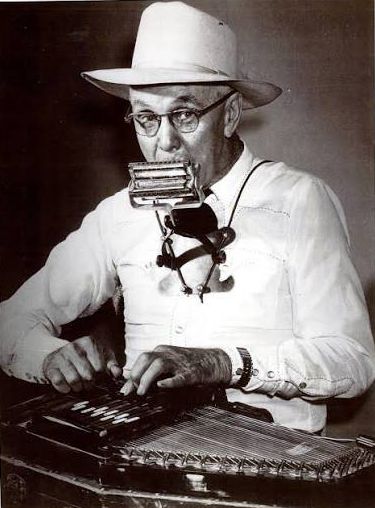
Pop
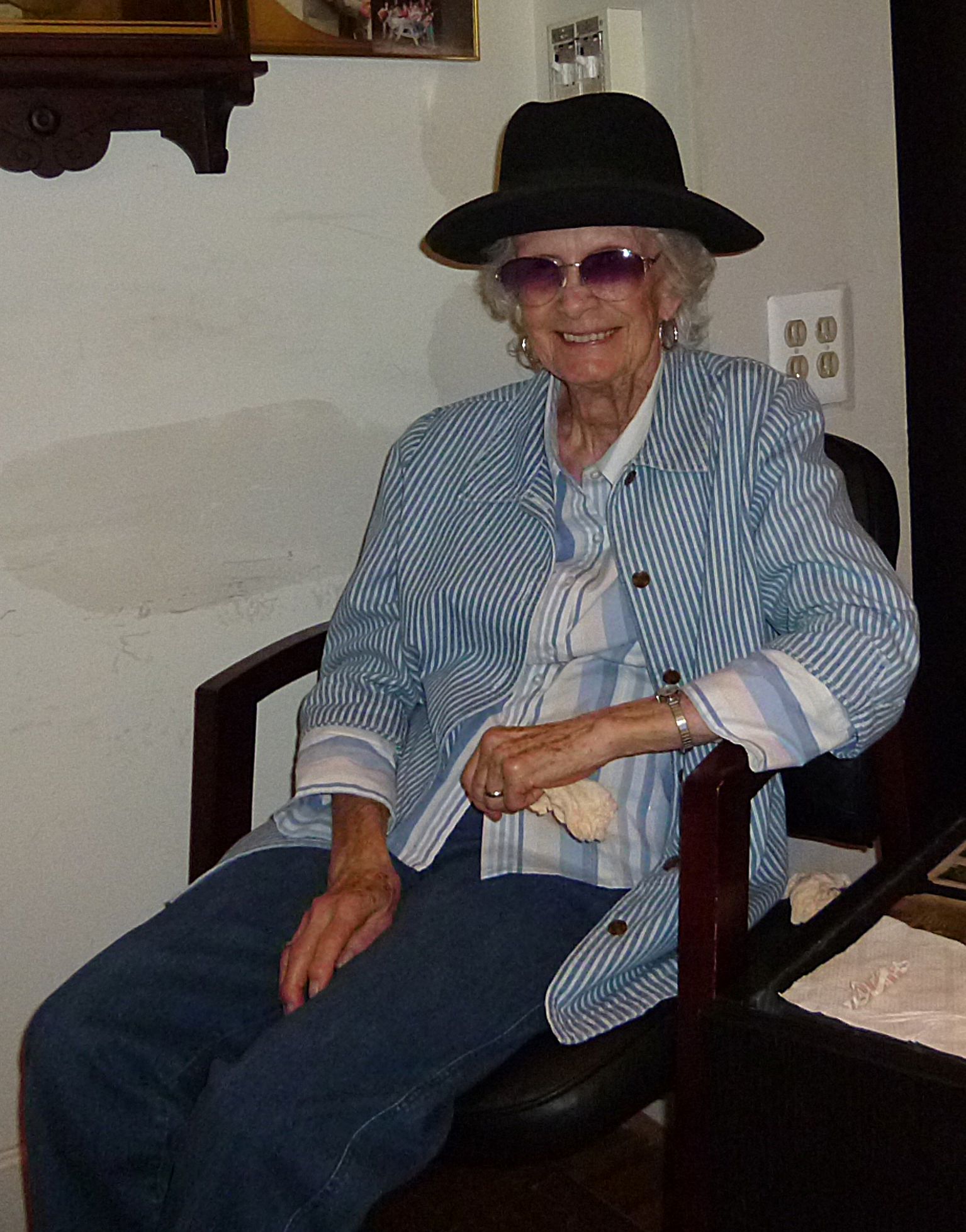
Patsy, getting ready to cancel “House of the Rising Sun.”