45. Table of Contents Previous Next
10/26/26
A TV’s a TV
By 1989, Bryan Deere and I, along with a few other admirers of Buzz Busby’s music, had been attending jam sessions at Buzz’s Columbia, Maryland, apartment for a couple of years. Buzz was holding court. He knew we were his captive audience, so he regaled us with funny stories, off-color jokes that he could no longer tell on stage, and hilarious parodies of country songs, especially the recitations. Buzz’s famous sense of humor was still intact and as sharp as ever. His mandolin playing was still brilliant, as he had never stopped playing his beloved Gibson A-50. Buzz no longer possessed his high tenor voice, but he could still sing lead and baritone, so the music was good, too. We picked and grinned.
By and large, Buzz had retired from playing shows. He still performed occasionally with his brother, Wayne, and other family members as The Busby Brothers, but that was not satisfying, as Wayne wouldn’t do any of the honky-tonk music Buzz loved. Their repertoire consisted of nostalgic songs of mother and home and gospel music.
One afternoon, when I was the only disciple who showed up for the jam, Buzz told me he wanted to start a new version of the Bayou Boys. He said, “Bring your guitar tomorrow and we’ll see if it’ll work. If you can’t cut it, I’ll have to get somebody else, ’cause this is business.” Then he asked, “Can you handle that?” I allowed as how I could. As I was leaving, Buzz said, “Oh, and by the way, bring a banjo picker.”
The next day, Mark Delaney and I went to Buzz’s place for our audition. After a few funny stories, we got down to picking. “Me and the Jukebox” was first, of course. After that one, Buzz said, “I can’t get rid of that song.” We did some Monroe and Lester & Earl, “Brown Eyed Darlin’” from the Lonesome Pine Fiddlers’ songbook, “Lost,” “Going Home,” “Don’t Come Runnin’ Back to Me,” and several other gems. After an hour or so, Buzz said, “I reckon you boys will do.” He told us he had booked a “rat hole” called Champ’s in Jessup, Maryland, where we would play every Sunday until further notice. I was a Bayou Boy!
I heard my phone ringing as I walked through my front door after the audition. Buzz was on the line. He asked, “Can you play a bass?” Me: “No.” Buzz: “It’s easy. Get you a bass, ’cause I had to give the guitar job to Lucky Saylor.” Me: “What!” Buzz: “I had to, ’cause Lucky gave me a new TV set.” Me: “Buzz, I thought you were gonna be professional.” Buzz: “I know, but a TV’s a TV.”
So that afternoon, I bought a bass from Chris Warner and played it at Champ’s two days later. But what the heck, I was a Bayou Boy.
Buzz’s description of that club as a rat hole was a little too kind. Champ’s was within walking distance of the Maryland House of Correction, so it was the first stop for inmates upon release. It was a ten-minute drive from the horse racing tracks in Laurel. It had about the cheapest prices for beer on tap in the state. So our “fans” were ex-cons, gamblers, and hard-core drunks. There were also some of Buzz’s old fans, but most of them fit into one of the above categories. One fellow staggered up to the stage and hollered, “Buzz, you ain’t as smooth as you used to be.” In the blink of an eye, Buzz came back with, “If you want smooth, stay home and listen to Lawrence Welk.”
The owner’s teenage sons had a rock band that rehearsed upstairs. They had the habit of turning their amplifiers up to the max. When Buzz asked Champ if he could do something about the racket, his only reply was, “Boys will be boys.” One Sunday, after we couldn’t hear ourselves think and had to quit mid-set, Buzz handed me his mandolin and charged up the stairs. Things were about to get interesting! A few minutes later, the loud music stopped, and the boys followed Buzz downstairs and sat at a table. How he accomplished that, he wouldn’t say. He only told us they had “declared a truce.” The agreement was that each band would play for thirty minutes at a time. Not only had Buzz worked it out, but our sets were reduced from forty minutes to thirty. We were amazed. Lucky thought Buzz had given the boys some of his pain pills in exchange for their cooperation, but I don’t think so. I’ve never known him to part with his hard-to-get prescription drugs. I think those wannabe musicians saw something in Buzz they wanted. Even though we were playing in their father’s dive bar, perhaps they got a glimpse of Buzz’s charisma, humor, and command as a bandleader, and they craved some of that. Or maybe he gave them pills. I’ll never know.
We toughed it out for a couple of months, but we all got tired of the place, so we quit. The only ones who seemed the least bit distressed by the separation were the kids in the rock band!
After going back to the old routine of jamming at Buzz’s place for a few months, Lucky Saylor booked us at the Blacksmith Restaurant in Manassas, Virginia. The Blacksmith was a cut above Champ’s. You could actually get a fairly good meal there, and the drunks-to-fans ratio was more favorable. By that time, Jimmy Bowman was our banjo player. We played the Blacksmith on Friday nights for about six weeks. That was our last recurring gig. The last version of the Bayou Boys played sporadically, here and there, for about five more years, averaging three or four shows a year.
Buzz drank infrequently during my time as a Bayou Boy. He was never drunk at a show. He did go on binges during that period, often in public places like bluegrass festivals and parties – events that bluegrass musicians and fans attended. Those drunken misadventures fueled his reputation for being an out-of-control alcoholic, which is why we could only get bookings at lowbrow dives.
Buzz’s last performance was in 1995, when my band, the Patuxent Partners, backed him at a concert in Baltimore. Given all he had done to help popularize bluegrass in Washington, it was only fitting that Buzz Busby’s final appearance was in an elegant theater rather than a rat hole.
Photos:
1. Buzz, Me, and Lucky at the Blacksmith restaurant
2. Champ’s advertising poster
3. Buzz and me in 1991
Tom Mindte
October 2026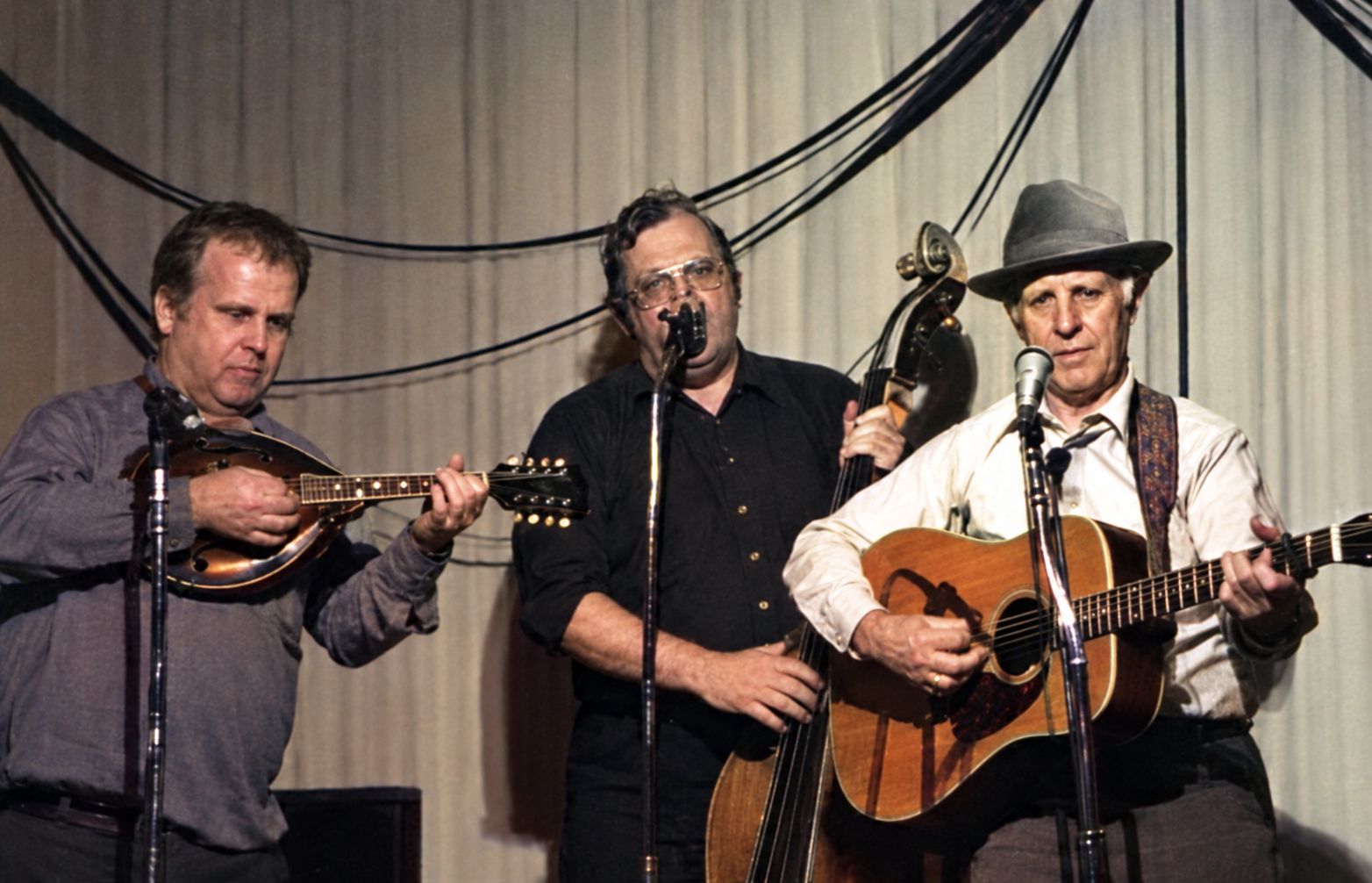
Buzz, Me, and Lucky at the Blacksmith restaurant
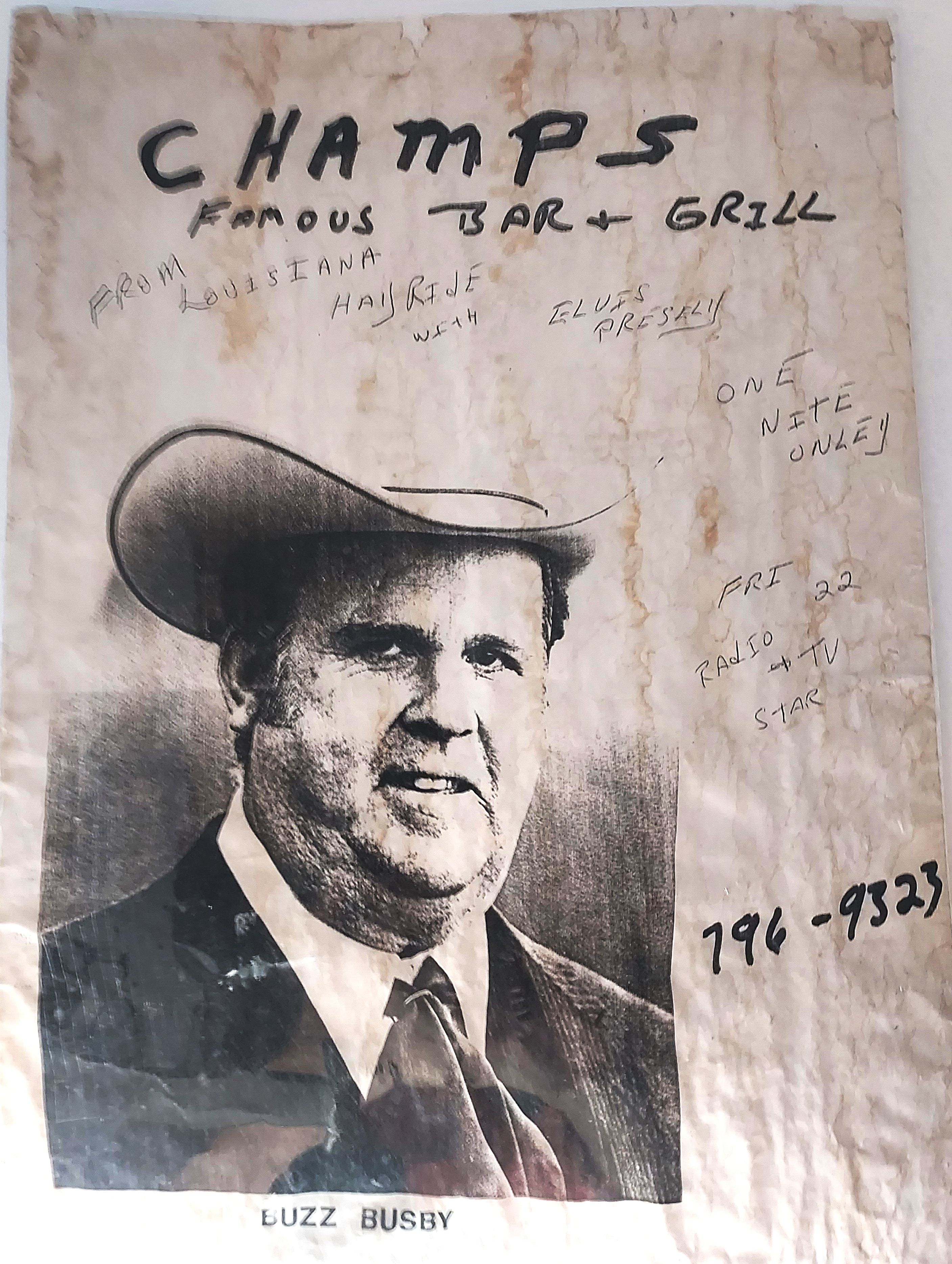
Champ’s advertising poster
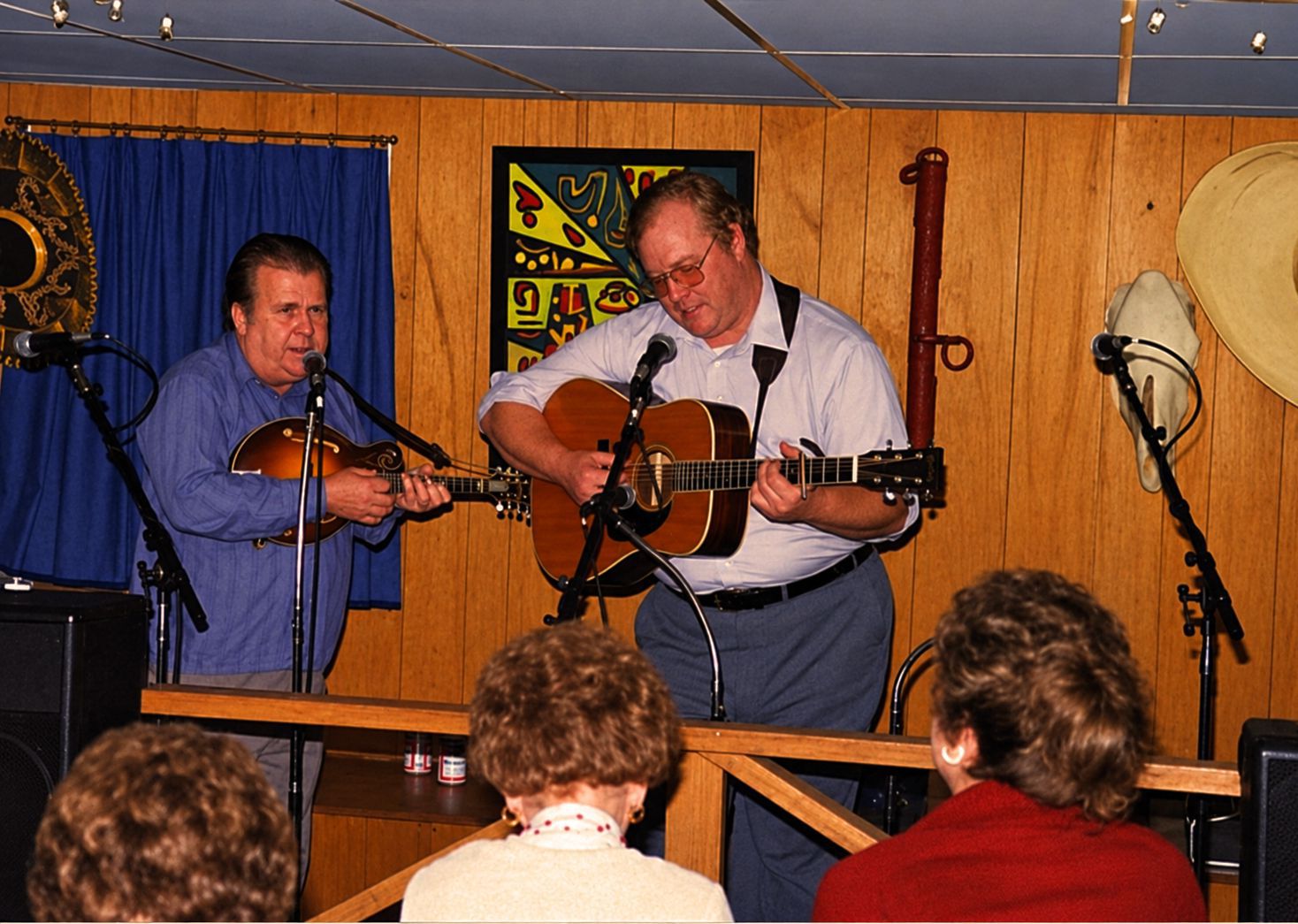
Buzz and me in 1991